
Folding carton and product box design
Box packaging design with structure and shelf presence.
Brand-led box and carton design shaped around the opening sequence, protection, shelf display, fulfilment and the converter's approved structural dieline.
- Formats
- Folding cartons, sleeves and product boxes
- Best for
- Retail, e-commerce and premium products
- Focus
- Structure, opening and finish
Brand expression with a physical sequence
Every panel and opening moment has a job.
A box is both a communication surface and a structure. It has to protect the product, pack efficiently, present correctly on shelf or in transit and guide the user through a deliberate opening sequence.
I develop the brand and panel hierarchy alongside structural concepts, then prepare approved artwork around the converter's engineered dieline, board choice, print method and finishing plan.
Three box-design priorities
Presence, protection and opening order.
The best format balances commercial impact with material, packing, shipping and manufacturing realities.
-
Panel hierarchy
Give the front, sides, top, base and opening panels clear roles so the pack communicates in the right order.
-
Structural presence
Explore proportion, closure, window, sleeve or opening ideas with enough realism for converter validation.
-
Production economy
Consider board, nesting, glue, finishes and assembly so the creative route remains appropriate for volume and budget.
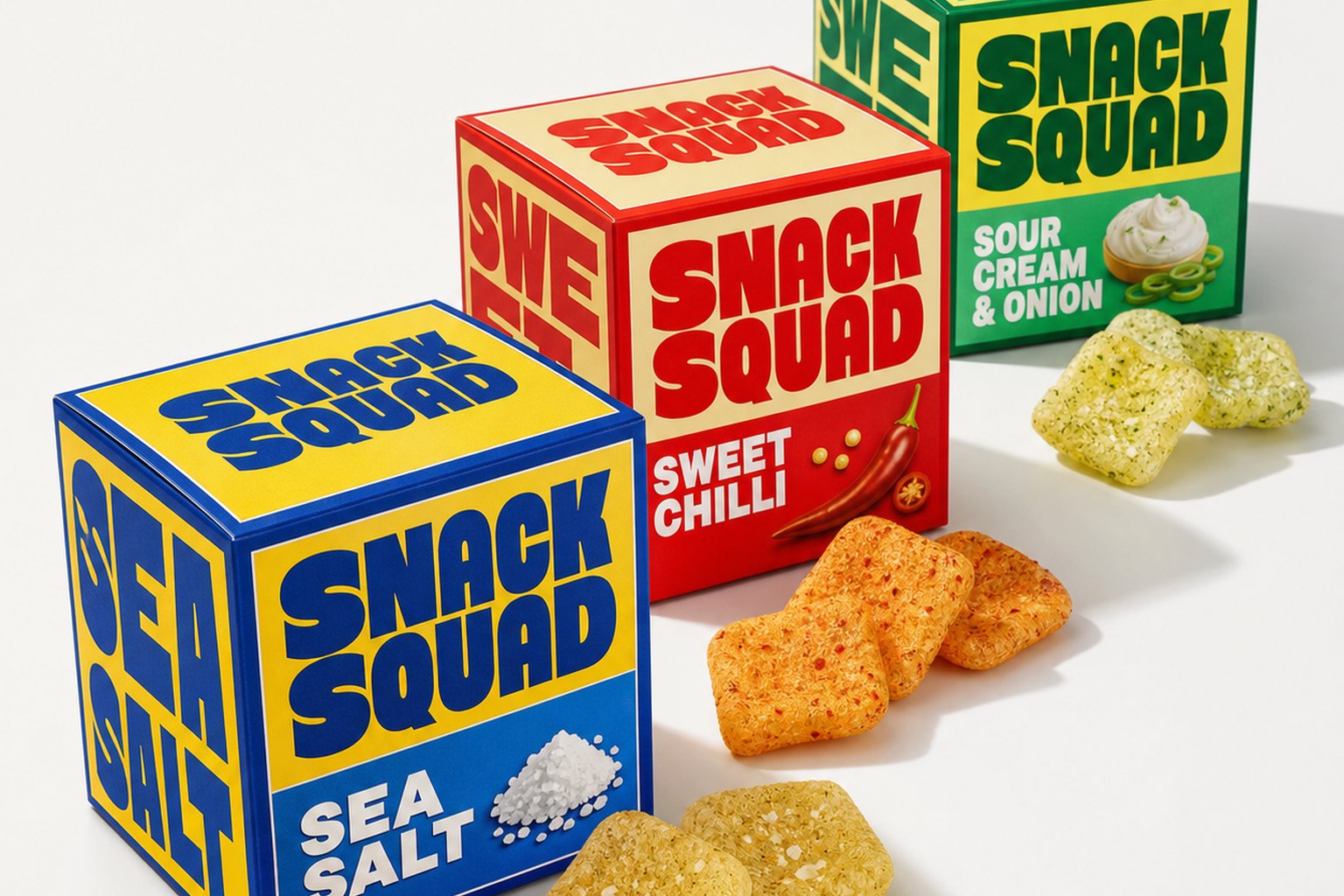
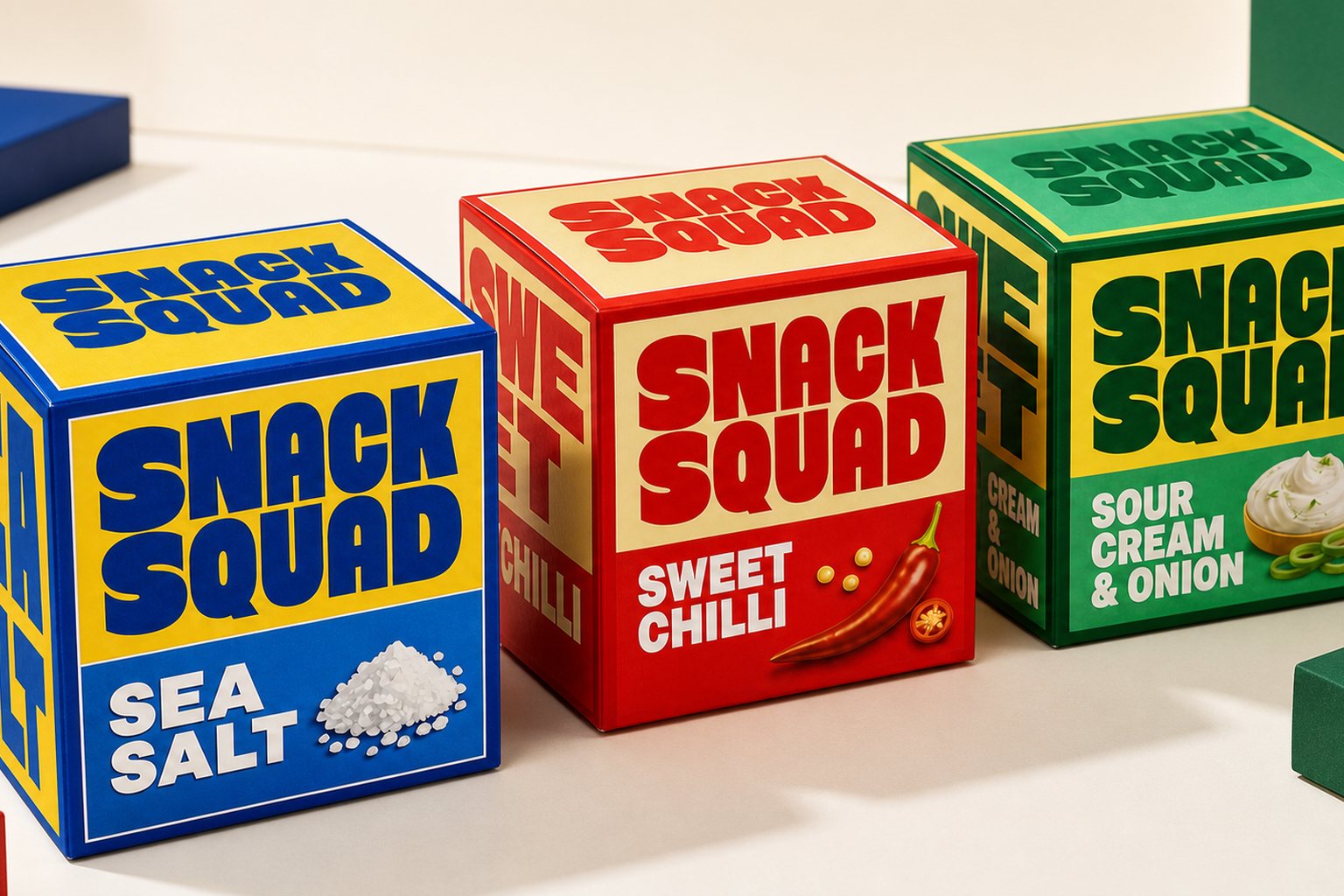
Carton production awareness
The cutter, board and packing method shape the design.
The converter should engineer and approve the final dieline, material and load performance. Artwork is then built around creases, folds, glue flaps, manufacturer joints, dust flaps, windows, barcode zones and the way the flat carton is packed and erected.
Foil, embossing, debossing, varnish, lamination and specialist stocks are considered against board surface, registration tolerance, cracking risk, budget and proofing. Prototypes and wet proofs should be reviewed where the finish or structure is critical.
A box-pack workflow
From product dimensions to converter preflight.
-
Measure
Confirm product size, weight, orientation, protection, packing, fulfilment, display and commercial volume.
-
Explore
Develop the opening sequence, panel roles, structural concept and brand expression.
-
Validate
Work with the converter to resolve the engineered cutter, board, closure, window and finish plan.
-
Prepare
Apply approved design to final dielines and issue artwork for proofing and supplier preflight.
The converter and relevant packaging specialists retain responsibility for final structure, board specification, load performance, packing efficiency and manufacturing approval.
Box packaging scope
Support across structure and surface.
Structural concepts and graphic design can be developed together, with final engineering and performance approval completed by the appointed converter.
- Box and carton packaging identity
- Panel hierarchy and opening sequence
- Structural format concepts
- Board and finish direction
- Artwork on converter-approved dielines
- Prototype, proof and supplier liaison
Before the box project begins
Box packaging questions.
Do you create the box structure as well as the graphics?
Structural concepts can be explored, but the converter should engineer and approve the final production dieline, material and load performance.
What is needed before box artwork starts?
Product dimensions, weight, orientation, protection requirements, packing method, retail environment, fulfilment method and the approved cutter guide.
Can you add premium finishes?
Yes. Foil, embossing, debossing, spot varnish and specialist stocks can be tested against budget, board and production tolerances.
Will the design work for e-commerce and retail?
It can be developed for both, but shelf display, shipping protection, tamper evidence and fulfilment may require different structures or sleeves.
Can a cardboard box be described as sustainable?
Broad environmental statements should be avoided. Claims should identify the specific material, component, recycled content or disposal route and be supported by current evidence.
Have a product that needs a box or carton?
Give the structure and graphics one clear direction.
Share the product dimensions, weight, proposed format, sales route, packing method, supplier status, SKU count and target launch window.